Last updated: October 2026
Quick answer
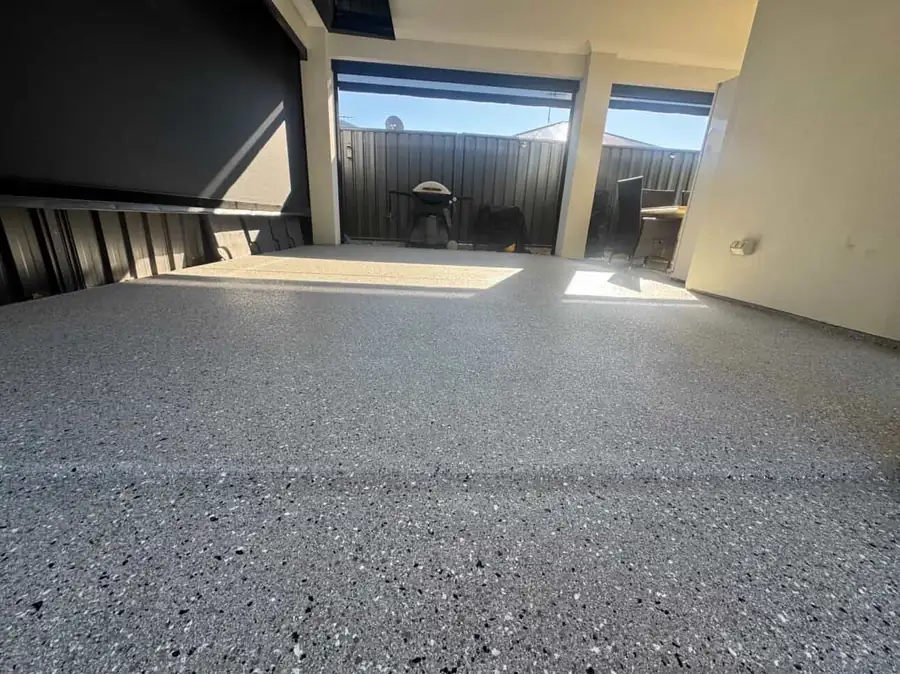
Outdoor epoxy flooring in Adelaide has to cope with extreme UV, heat, rain, pool chemicals and foot traffic on a slab that is often not perfectly sealed from below. Standard indoor epoxy yellows and chalks in direct sun, so outdoor jobs normally use a UV-stable topcoat such as polyaspartic or aliphatic polyurethane over a flake or textured base, with a slip-resistant finish.
Why outdoor floors need a different specification
Epoxy is a brilliant primer and build coat, but its chemistry reacts to ultraviolet light. In direct Adelaide summer sun, an ordinary clear epoxy topcoat can amber, chalk and lose gloss within a season or two. The base coat underneath is fine; the problem is the surface that sees the sun. That is why professional outdoor systems keep epoxy underneath for adhesion and strength, then finish with a UV-stable topcoat that was designed to sit in sunlight.
The second difference is moisture. Garage slabs sit under a roof; patios and driveways are rained on, washed, flooded by sprinklers and sometimes saturated by groundwater. Water vapour pushing up through a poorly protected slab can lift a coating from underneath. We assess drainage, falls, vapour paths and the condition of the concrete before recommending any outdoor system, and we say so honestly if a particular slab is a poor candidate.
Where outdoor epoxy makes sense
- Covered or partly shaded alfresco areas and verandahs, where a hard-wearing, easy-clean surface is worth having.
- Pool surrounds on concrete, where grip underfoot and a surface that does not hold heat like dark pavers is important.
- Driveways and carports that need a stain-resistant finish, subject to slab condition and a UV-stable topcoat.
- Steps, ramps, entries and walkways where a textured, slip-resistant finish is needed.
- Commercial courtyards, outdoor dining areas and loading docks that need a washable surface.
How the system is built
- Assessment. We look at the slab age, drainage, existing sealers, sun exposure and how the area is used.
- Grinding or shot-blasting. The surface is mechanically opened so the coating can key in. Old sealers and laitance are removed.
- Repair. Cracks, spalls and joints are repaired; control joints are treated so they can still move.
- Epoxy or polyaspartic base. A pigmented base coat is applied. For many outdoor jobs a flake or quartz broadcast adds texture and hides wear.
- UV-stable topcoat. One or more topcoats seal the surface. A fine anti-slip additive is included where the floor will get wet.
Heat underfoot and slip resistance
Dark colours absorb heat. A black or charcoal floor in direct sun can become uncomfortable to walk on in an Adelaide January, whereas lighter blends stay noticeably cooler. If bare feet matter, tell us and we will steer you towards lighter tones and a texture that does not store as much heat. For pool areas and steps, grip matters more than looks, and we recommend texture or an anti-slip additive in the final coat.
Slip resistance is measured in Australia against standards such as AS 4586 for pedestrian surfaces, and a reasonable contractor will talk about texture and wet conditions rather than promising a rating they have not tested. For anything commercial, ask what slip classification your venue or insurer needs.
Coastal and hills considerations
In beachside suburbs like Glenelg and along the Noarlunga coast, salt air and windblown sand are tough on exposed finishes and increase the importance of a sealed, easily rinsed topcoat. In the Adelaide Hills near Mount Barker, cooler nights, more rain and sloping blocks mean drainage and cure timing deserve extra attention. On the northern plains, including Gawler, summer heat is more intense and slabs on reactive clay can move, so joints and cracks need to be treated as working features rather than filled and forgotten.
Cost and alternatives
Outdoor systems typically cost more per square metre than a basic indoor flake floor because of the extra preparation and the UV-stable topcoat. The cost guide lists labelled typical ranges and the factors that move them. If you are choosing between epoxy and a polyaspartic-only finish, read epoxy versus polyaspartic; if you are thinking of a cheaper paint-on product, epoxy versus floor paint explains why it rarely lasts outdoors.
To book a free assessment, use the quote form or call 0421 443 213. Photos of the area from a couple of angles, plus the approximate length and width, are enough to start the conversation.
Frequently asked questions
Will outdoor epoxy turn yellow in the sun?
Standard clear epoxy can. Outdoor jobs normally finish with a UV-stable topcoat, which is designed to resist yellowing and chalking in direct sunlight.
Is it safe around a pool?
A textured, anti-slip finish suits pool surrounds. We recommend grip over gloss and lighter colours that stay cooler underfoot.
Can any outdoor slab be coated?
Not always. Slabs with active moisture problems, poor drainage or crumbling concrete may need repair first or may not be suitable. We say so after inspecting the slab.
Keep reading
Ready to talk about your project? Call or text 0421 443 213, Monday to Saturday, 7:00 AM to 8:00 PM, or use the free quote form.
Call 0421 443 213