Last updated: October 2026
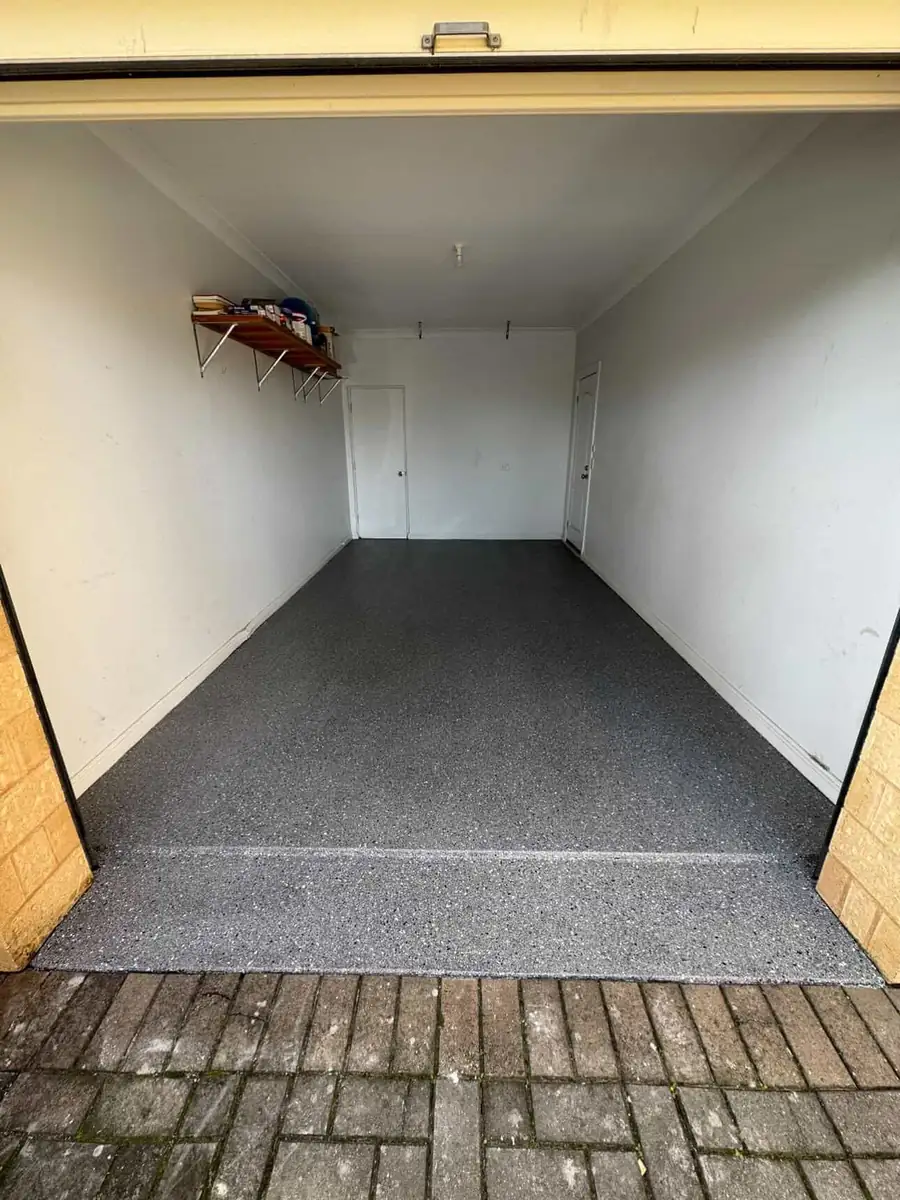
Quick answer
Epoxy bonds strongly and builds thickness at a lower cost but yellows in sunlight and cures slowly; polyaspartic cures fast, stays clear under UV and tolerates cooler temperatures but costs more and is harder to apply. Many Adelaide floors use both: an epoxy base for bonding and build, topped with a polyaspartic or polyurethane clear coat for UV stability and wear.
Two chemistries, one goal
Epoxy and polyaspartic coatings are both two-part systems that harden into a tough plastic film on concrete. In everyday conversation, people often say "epoxy floor" for any of them. In the trade, the difference matters because the two behave differently when applied, in the sun, and over time.
Where epoxy shines
- Excellent adhesion to prepared concrete as a primer and base coat.
- Can be built to high thickness in a single pass, which helps level and fill small imperfections.
- Lower material cost than polyaspartic.
- Longer working time, giving installers more room to place flake or work a decorative effect.
- Very good chemical resistance for fuels, oils and many cleaning products.
Where polyaspartic shines
- UV stability: does not amber or chalk in sunlight the way standard epoxy does.
- Fast curing: many systems return to light foot traffic within hours and vehicle traffic in a day or so, depending on product and conditions.
- Works over a wider temperature range, which helps in cool winter mornings.
- Good abrasion resistance and clarity as a topcoat.
- Flexibility, which helps it cope with slight slab movement.
The downsides to know about
Epoxy yellows outdoors and takes longer to cure, which can mean extra days before the car returns. Polyaspartic has a short working time, so a mistake is hard to correct, it demands more experience and it is more expensive per litre. It is also more sensitive to moisture in the slab during application, so a pure polyaspartic system should not be chosen by price alone. A poor installation of the fastest product on the market still fails.
Side by side
| Factor | Epoxy | Polyaspartic |
|---|---|---|
| UV stability | Poor; yellows and chalks in sun | Excellent |
| Cure speed | Slower; typically a day or more before vehicles | Fast; hours to a day depending on product |
| Working time | Longer | Short; needs experience |
| Material cost | Lower | Higher |
| Build thickness | Good in one coat | Usually thinner coats |
| Best role | Primer, base coat, build coats | Topcoat, UV-exposed areas, fast turnaround |
The hybrid system most garages actually get
A very common specification for Adelaide homes is an epoxy base for adhesion and flake embedment, then a polyaspartic or polyurethane clear coat for UV stability, wear and a faster return to service. It combines the cost-effective bonding of epoxy with the sun resistance of the topcoat. For garages that get no direct sun, an epoxy topcoat can be enough, and the money saved can go into better preparation. For floors with sunlit thresholds, a UV-stable topcoat is worth it.
Which should you choose?
- Closed garage with no sun on the floor: epoxy base and epoxy topcoat can be a sound, lower-cost choice.
- Garage with a roller door that lets in afternoon sun: epoxy base with a UV-stable topcoat.
- Covered alfresco, pool surround or driveway: UV-stable topcoat is strongly recommended; see outdoor epoxy flooring.
- Tight deadline or cold weather: polyaspartic topcoat can help, with the cost trade-off.
- Commercial sites with short shutdowns: fast-cure systems are common; see commercial floors.
Whatever the chemistry, durability starts with grinding and repairs. The Adelaide climate guide explains how heat and UV influence the choice, and the cost guide shows how topcoat type changes budgets in typical Australian ranges.
Questions to ask your installer about topcoats
- Which topcoat will be used on this job and why?
- Is the finish UV-stable, and will the door line get sun?
- What temperatures and humidity can it be applied in, and how will you manage them?
- How long until I can walk on it and park on it?
- What are the written terms if the topcoat fails?
Installers who talk about topcoat chemistry in specific terms usually know their materials. If an answer is vague, push for the product data sheet and read the application limits.
Frequently asked questions
Is polyaspartic always better than epoxy?
Not always. Polyaspartic is better for UV and speed, but epoxy is an excellent base and is more economical. A hybrid is common.
Can polyaspartic go straight onto concrete?
It can in some systems, but it is more sensitive to moisture and short on working time, so a proper assessment is essential.
Will an epoxy garage floor yellow?
It can where sunlight reaches it. Floors out of direct sun are far less affected.
The garage epoxy flooring guide compares return-to-service times for epoxy and polyaspartic topcoats side by side.
Keep reading
Ready to talk about your project? Call or text 0421 443 213, Monday to Saturday, 7:00 AM to 8:00 PM, or use the free quote form.
Call 0421 443 213