Last updated: October 2026
Quick answer
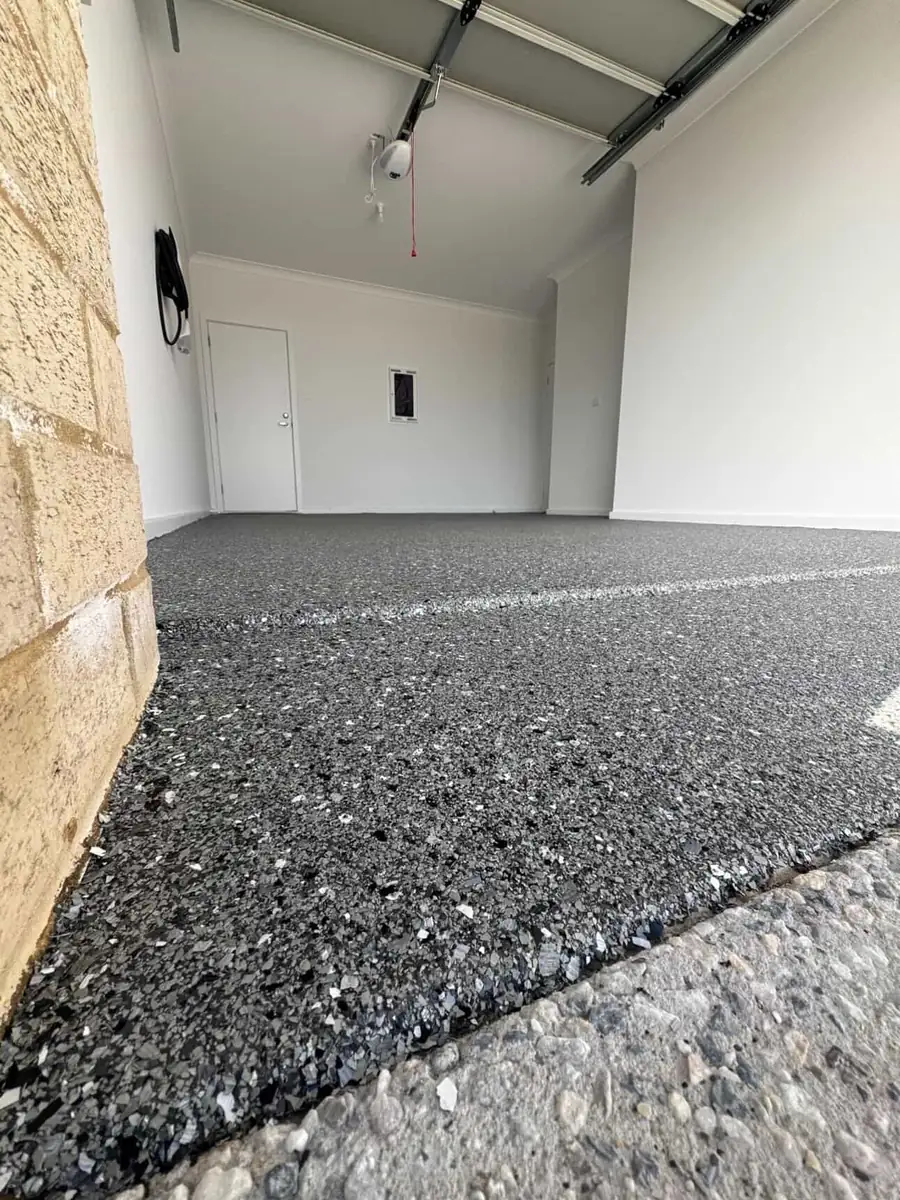
A flake epoxy floor is a pigmented epoxy base coat with coloured vinyl flakes broadcast into it and sealed under a clear wear coat. It is the most common garage system in Adelaide because it hides dirt, adds grip, resists hot-tyre pickup and is far easier to clean than bare concrete. The quality of the diamond grinding underneath matters more than the flake colour you pick.
What a flake epoxy floor actually is
A flake floor, sometimes called a chip floor, is built in layers on a ground concrete slab. A coloured epoxy base coat is rolled out, small vinyl flakes are thrown into it by hand until the surface is covered, and once that layer has cured the loose excess is scraped and swept away. One or two clear topcoats then lock the flakes in and give the floor its wear surface. The result is a seamless, speckled floor with a slightly textured finish rather than a flat painted one.
Because the flakes are random in size and colour, a flake floor is forgiving. Tyre marks, dust, a dropped screw and the odd oil drip all disappear into the pattern, which is why it suits a working garage better than a plain single-colour coating. It is also the most affordable of the decorative epoxy systems, which is why we recommend it first for most household garage budgets.
How we build a flake floor, layer by layer
- Diamond grinding and vacuum extraction. The slab is ground to open the surface and remove laitance, old sealer and paint. Dust is captured with industrial extraction, not swept around the garage.
- Repairs. Cracks, spalled edges, old anchor holes and control joints are cleaned out and filled with a suitable repair material so they do not telegraph through the finished coating.
- Primer or base coat. A pigmented epoxy is rolled over the whole floor at a controlled thickness. This is the layer that bonds to the concrete.
- Flake broadcast. Flakes are scattered into the wet base. A full broadcast covers the base completely; a partial broadcast leaves more base colour showing through.
- Scrape and vacuum. After curing, loose flakes are scraped and removed so the surface is even and ready to seal.
- Clear topcoat. One or two clear coats seal the flakes and provide the abrasion, chemical and hot-tyre resistance. For sun-exposed doorways we discuss a UV-stable topcoat so the clear coat does not yellow.
Why flake suits Adelaide garages
Adelaide garages swing between very hot summers and cool, damp winter mornings. A slab can sit well above air temperature in a closed garage on a 40-degree afternoon, and it can be cold and slightly damp after a night of winter rain. A flake system that has been properly profiled and cured handles both, and the flake texture gives bare feet and wet tyres something to grip when the floor is damp. If you want the science of why heat and UV change how we schedule a job, the Adelaide climate guide goes through it step by step.
Hot-tyre pickup is the other local issue. Cars driven on bitumen in summer arrive home with soft, hot rubber that can lift a weak coating. A correctly built flake floor with a hard-wearing topcoat is designed to stand up to that, whereas thin DIY kits and floor paints often peel in the tyre footprints within a season. If you are weighing a cheaper option, our comparison of epoxy and garage floor paint sets out where the money goes.
Choosing flake colours and coverage
Flake blends range from near-solid greys through to multi-colour granite looks. Darker blends with a mix of tones hide dirt best; very pale blends look bright but show tyre marks sooner. Full broadcast is the practical choice for cars, because every square centimetre is textured and hides wear. Partial broadcast has a more modern, smoother look but shows more base colour and marks more easily. Bring a photo of your garage walls and cabinetry and we will talk through blends that suit the space.
Ask to see a physical sample board in daylight and under garage lighting, because colours shift a lot between the two. If you are torn between a flake and a more dramatic look, flake versus metallic epoxy covers the trade-offs in cost, maintenance and how forgiving each one is on an imperfect slab.
Grip, cleaning and everyday care
- Sweep or blow off grit weekly; grit is what scratches a topcoat over time.
- Mop with a neutral cleaner and warm water. Avoid solvent cleaners and harsh degreasers.
- Wipe oil, brake fluid and battery acid promptly even though the topcoat resists them.
- Use rubber or felt pads under jack stands and metal ladder feet.
- If the floor feels slippery when wet, tell us; we can add a finer anti-slip additive to the topcoat for wet-entry garages.
Where we install flake systems
Single, double and triple garages are the bread and butter, but flake works anywhere a durable, easy-clean floor is wanted: laundries, workshops, sheds, storage rooms, plant rooms and covered alfresco floors that are shaded from direct sun. Compact inner-suburban garages in areas like Norwood and Unley need careful dust control and access planning, while larger hills and northern-suburb sheds, for example around Mount Barker or Gawler, often have more repairs to deal with because of slab movement over time.
For exposed driveways, pool surrounds and open patios, a standard flake and clear coat is not always the right specification; head to outdoor epoxy flooring for what changes. For forklift traffic or chemical exposure, see commercial and industrial floors.
Timeline and what to expect
A typical double garage is measured on a site visit, then scheduled for a morning start so the work is done before the hottest part of the day. Grinding and repairs usually come first, with coating over the following one to two days depending on the system and the weather. After the final coat you can usually walk on the floor lightly the next day, but vehicles should wait for the cure time we give you in writing. The full sequence is explained in how an epoxy job works.
Before the day, you will need to empty the garage or agree where items will sit. We confirm what is included, the flake coverage, the number of topcoats and the written workmanship terms before any work starts, and the prep and warranty page lists the questions worth asking any contractor.
Frequently asked questions
Is flake epoxy good for hot tyres?
Yes, when it is installed over a properly ground slab with a hard-wearing topcoat. Peeling under tyres is usually a preparation or product problem rather than a flake problem.
How long does a flake epoxy floor last?
A well-prepared floor in a household garage commonly lasts many years before it needs a recoat. Heavy workshop use, sun-exposed doorways and skipped preparation shorten that.
Can I choose any colour?
Flake blends come in dozens of colourways. We help you pick one that hides dirt and suits your garage, and we recommend looking at samples in real light.
Do I need to empty my garage?
Yes. Vehicles, shelving and storage must be cleared so the slab can be ground and coated wall to wall. We tell you how early to clear and when items can return.
Flake is the most common finish for home garages. Our garage epoxy flooring Adelaide guide covers parking times, moisture checks and garage-specific care.
Keep reading
Ready to talk about your project? Call or text 0421 443 213, Monday to Saturday, 7:00 AM to 8:00 PM, or use the free quote form.
Call 0421 443 213