Last updated: October 2026
Quick answer
A typical epoxy floor project in Adelaide runs in nine steps: enquiry, free on-site assessment, written quote, booking, diamond grinding, repairs, base and decorative coats, topcoat and cure, then a final walkthrough. Most household garages take about one to three days on site, plus a cure period before vehicles return.
Before the job: assessment and quote
Everything starts with looking at the floor. Photos and dimensions get the conversation going, but a site visit is how we assess the slab, check for moisture risk, measure the area and talk about how you use the space. We explain what we recommend and why, and you receive a written scope that describes preparation, number of coats, product type and cure time.
- Enquiry and photos. You call 0421 443 213 or use the quote form, and send photos and rough dimensions so we understand the space.
- Free on-site assessment. We visit, measure, check the slab for cracks, old coatings, oil and moisture risk, and talk through systems, colours and timing.
- Written scope and quote. You receive a written scope listing preparation method, repairs, the number of coats, the topcoat and the cure schedule.
- Booking and preparing the space. We agree a start date. You clear the vehicles and storage, or we agree how items will be moved.
- Grinding and dust extraction. The slab is diamond-ground with extraction to remove the weak surface and create a profile.
- Repairs and joint treatment. Cracks, chips and joints are repaired, and oil-affected areas are treated.
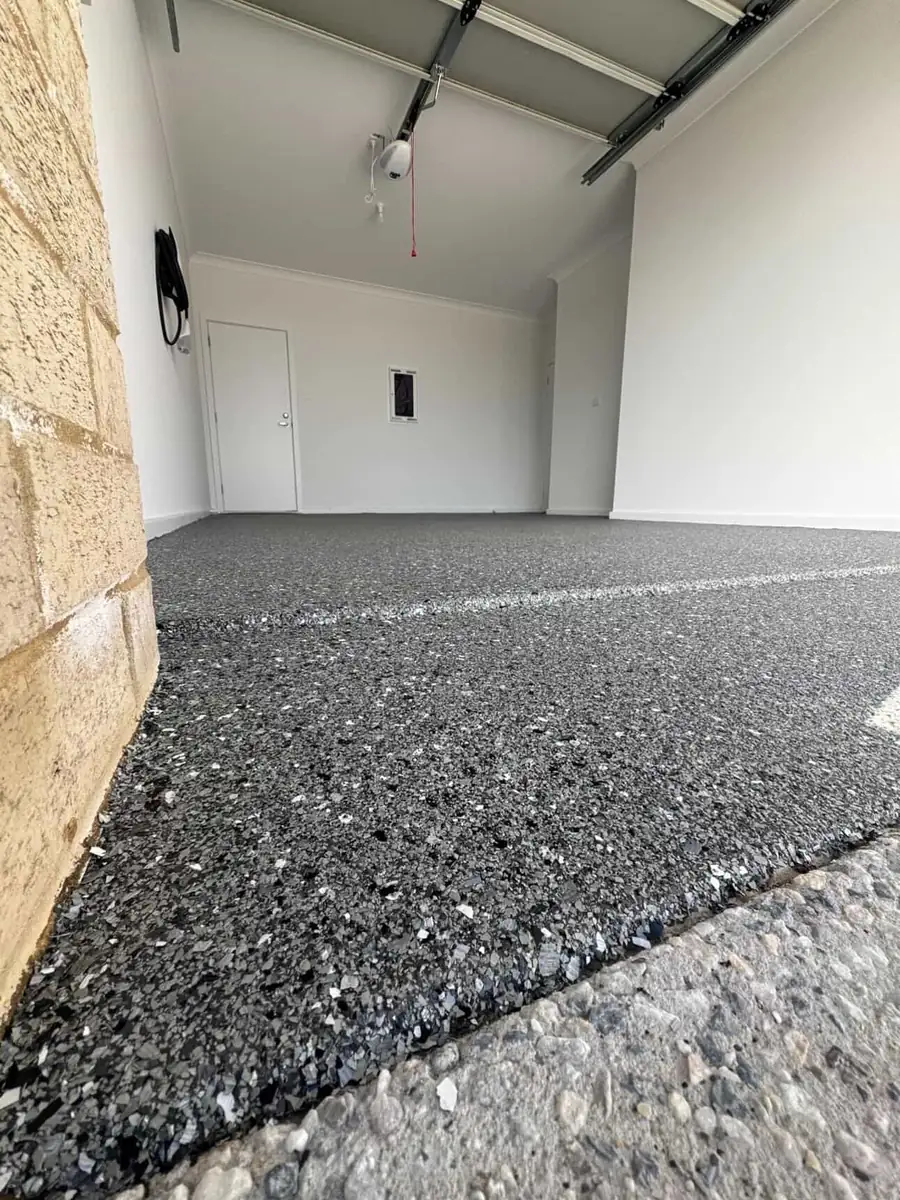
- Base coat and decorative layer. A pigmented base is applied; flake is broadcast or the metallic effect is worked in.
- Topcoat and cure. One or two clear coats seal the floor. We give written walk-on and vehicle-return times.
- Final walkthrough. We inspect the floor with you, confirm the care instructions and workmanship terms.
Preparing the space
The garage or room must be empty so we can work wall to wall. Vehicles, shelves, workbenches and boxes need to be moved, and anything fragile should be removed. If you cannot move heavy items, tell us beforehand so we can plan. We also need access to power and a safe place to stage materials. For occupied homes, we discuss how to keep doors, pets and children away from the work area.
Grinding day
The first physical step is diamond grinding. A heavy grinder with a dust shroud runs over the slab while an industrial vacuum extracts dust. Edges and corners are done by a smaller handheld grinder. We then vacuum, inspect and mark any areas that need repair. Grinding generates noise, so we let neighbours know if the job is in a tight street. The dust hazard is why good contractors use extraction rather than sweeping, as explained in the climate and grinding guide.
Repairs, base coat and flake
Cracks and holes are cleaned and filled. Any oil is treated. Once repairs are cured and the slab is clean, the base coat is rolled out in sections. For flake floors, the broadcast follows immediately while the base is wet; for metallic floors the pigment is worked in by the installer. Details of each system are on the flake and metallic pages.
Topcoat, cure and return to service
After the decorative layer has cured, loose flake is scraped and vacuumed and the topcoat is applied. Cure times depend on the product and the temperature. As a guide, you may walk lightly on a floor the next day, but vehicles should wait for the cure time we confirm in writing, and chemical exposure should be avoided for longer. Hot or cold weather can extend those times.
After the job
We inspect the finished floor with you, answer care questions and confirm workmanship terms in writing. For daily care, sweep grit, clean with a neutral detergent and use pads under jack stands. If you ever notice a problem, tell us as soon as possible. For what to ask before you sign, see prep and warranty; for budgeting, see the cost guide.
Frequently asked questions
How long does a double garage take?
Many household garages are prepared and coated over about one to three days, depending on repairs and the system. The cure time before vehicles return is confirmed in writing.
Do I need to be home?
Not for the whole job, but we need access, and a walkthrough at the end is useful.
What if you find a problem under the old coating?
We stop and explain it. Soft concrete, heavy oil or moisture issues can change the scope, and we agree changes before proceeding.
Keep reading
Ready to talk about your project? Call or text 0421 443 213, Monday to Saturday, 7:00 AM to 8:00 PM, or use the free quote form.
Call 0421 443 213