Last updated: October 2026
Quick answer
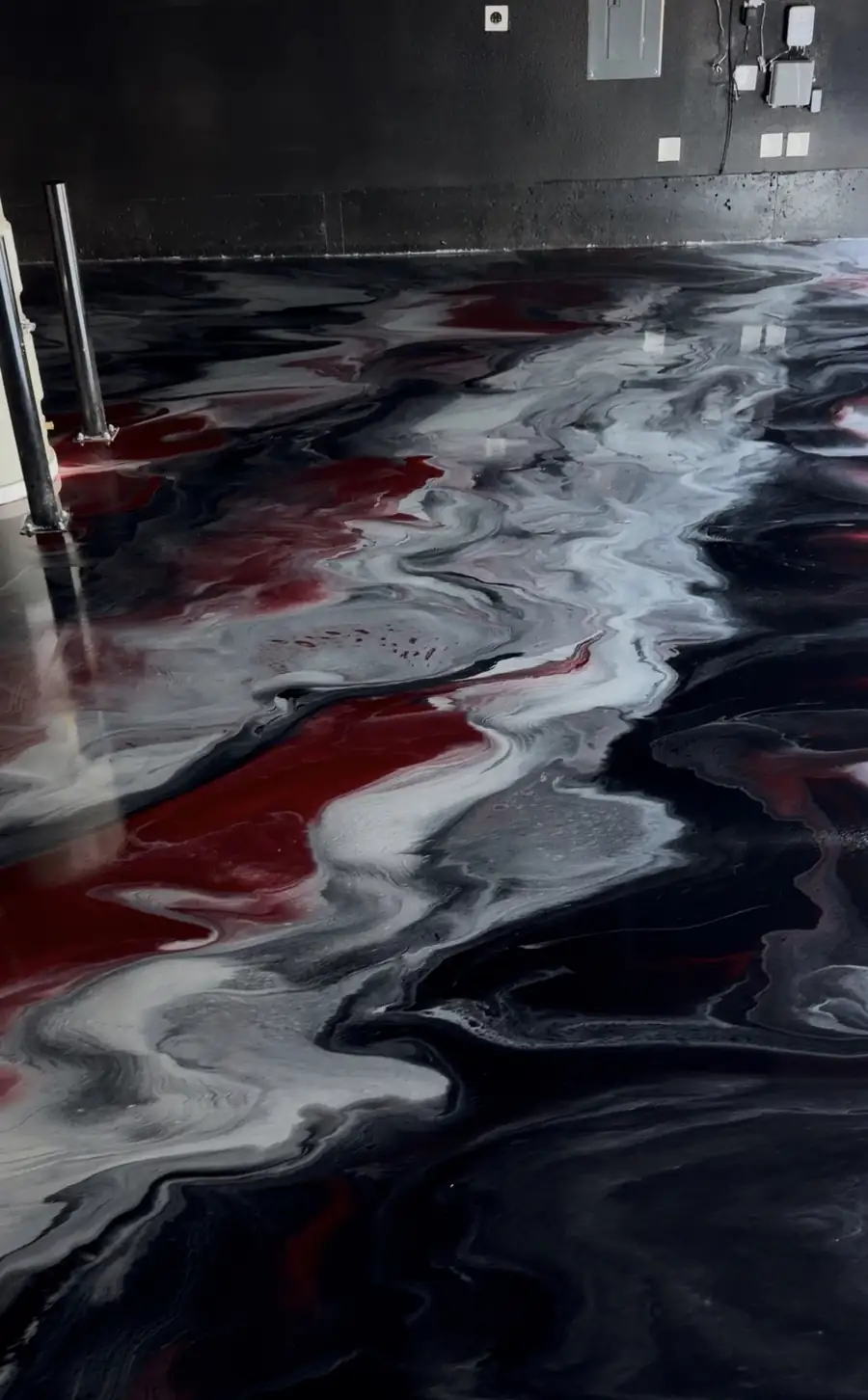
Metallic epoxy is a decorative floor where pearlescent pigments are worked through a clear or tinted epoxy so the surface looks like polished marble, lava or deep water. Every floor is one of a kind. It costs more than flake because it needs a flatter, better-prepared slab, more labour and a skilled hand, but the result suits garages, showrooms, studios and living spaces.
What makes a metallic epoxy floor different
Where a flake floor is speckled and practical, a metallic floor is a showpiece. Fine metallic and pearl pigments are mixed into epoxy resin and moved across the surface with rollers, brushes and sometimes a gentle heat source so they flow, pool and separate into veins, ripples and clouds. The pigment catches the light at different angles, which is why a metallic floor seems to shift as you walk past it.
No two floors are alike. Even with the same colours, the flow of the resin, the temperature of the slab and the timing of the installer all change the pattern. That unpredictability is the appeal, and it is also why we talk through realistic expectations and samples before you commit, rather than promising a picture from the internet.
The system, step by step
- Grinding and flattening. Metallic finishes show every ridge and trowel mark, so the slab is ground more carefully than for a flake floor and low spots are levelled.
- Crack and joint repair. Any movement cracks are filled and sanded flush; a decorative floor makes a repair visible if it is rushed.
- Solid colour base coat. A pigmented epoxy base, often black, charcoal, white or a deep colour, sets the background that the metallic pigment will float against.
- Metallic coat. The pigment-loaded epoxy is poured and worked into the pattern. This is the artistic step and it cannot be rushed or redone once it starts to gel.
- Clear protective topcoats. One or more clear coats seal the effect. A polyaspartic or polyurethane topcoat is common where the floor sees UV or heavy wear.
Where metallic works best in Adelaide
Residential garages that double as a feature space are the most common request, along with home gyms, bar areas, studios and showrooms. In coastal suburbs such as Glenelg and Port Adelaide, a seamless surface is also easier to keep free of salt and sand than a grouted tile or bare slab. In renovated inner-east homes around Norwood and Unley, metallic floors are sometimes used in living areas where a polished-concrete look is wanted without grinding and sealing the entire slab.
Metallic epoxy is not our first suggestion for a busy driveway or an unshaded outdoor area. Sunlight yellows standard epoxy over time, and a decorative floor shows that change quickly. For those situations, look at the outdoor epoxy flooring page to see what changes in the specification.
Maintenance and what to expect long term
- Metallic floors are smooth and glossy, so they show dust and tyre film more than flake. Dust-mop or blow off regularly.
- Use a neutral cleaner and a soft microfibre mop. Abrasive pads and strong solvents dull the gloss.
- Glossy floors can be slippery when wet; if the space gets wet, ask for a fine anti-slip additive in the topcoat.
- Felt or rubber pads protect against jack stands, workshop stools and toolbox wheels.
- Expect very fine hairline marks to appear over years of use; a refresh coat can restore the finish.
Metallic or flake: which should you choose?
If your priority is a floor that hides dirt, resists tyre marks and costs less, flake is usually the better answer. If the floor is part of how the space looks and you are happy to take a little more care of it, metallic is worth the investment. Our detailed comparison, flake versus metallic epoxy, sets the two side by side, and the cost guide explains why the price gap exists.
We also compare epoxy with polished concrete for people who want a modern look without a coating; see epoxy versus polished concrete. And if you are on the fence about how long a metallic system will last in the heat, epoxy versus polyaspartic explains why we often finish decorative floors with a UV-stable topcoat.
Getting started
The first step is a free on-site assessment. We look at the slab, check for cracks and old coatings, talk through colours, and show you samples. You will receive a written scope that lists the preparation method, the number of coats, the topcoat type and the cure time before the floor can take vehicles. Photos of any floor you like help a lot, even if they are from another country. Send them through the quote form or text them to 0421 443 213.
Frequently asked questions
Is metallic epoxy harder to look after than flake?
It is smoother and glossier, so it shows dust and tyre film more readily. Regular dust-mopping and a neutral cleaner keep it looking sharp.
Can you copy a floor I saw online?
We can aim for a similar palette and style, but every metallic floor flows differently, so an exact copy is not possible.
Is metallic epoxy suitable for a garage with cars?
Yes, when it is built on a well-prepared slab with a suitable hard-wearing topcoat. Many people choose it for a garage that doubles as a display or hobby space.
Is metallic epoxy flooring popular in Australia?
Yes. Metallic epoxy is a common choice for feature garages, showrooms, studios and some living areas around Australia. In Adelaide it suits indoor or shaded floors; sun-exposed areas need a UV-stable topcoat or a different system.
Is a metallic epoxy floor slippery?
A high-gloss metallic floor is smoother than flake. Where it may get wet, we add a fine anti-slip additive to the topcoat, which slightly reduces gloss but improves grip.
Keep reading
Ready to talk about your project? Call or text 0421 443 213, Monday to Saturday, 7:00 AM to 8:00 PM, or use the free quote form.
Call 0421 443 213